
Categories
Living In Eastern IdahoPublished June 1, 2026
The History of Idaho Falls: How a Small River Town Became Eastern Idaho's Hub

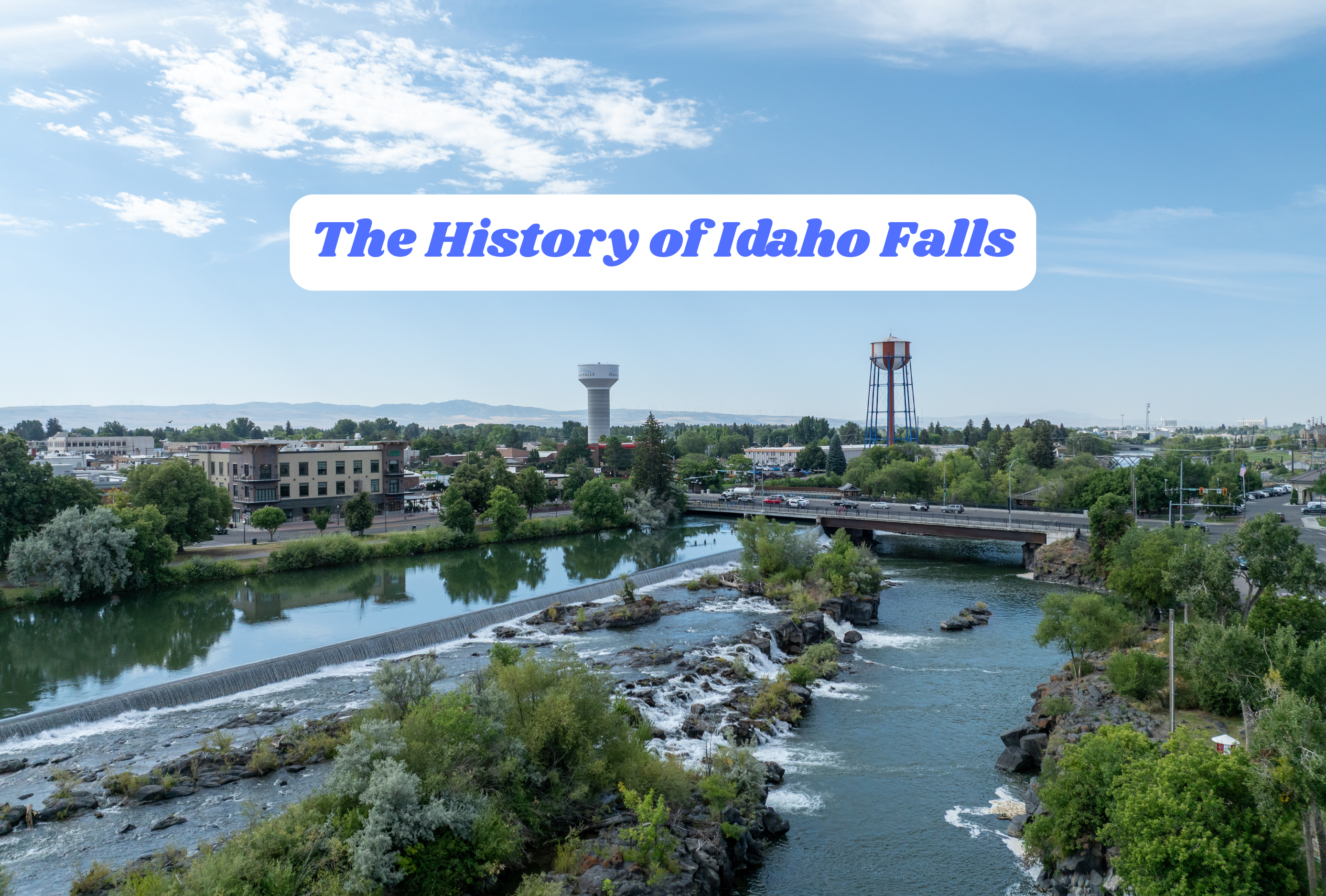
Idaho Falls wears its history quietly. Walk along the Greenbelt on a summer evening and you will see families strolling past the Snake River falls, joggers heading toward the temple, and the downtown skyline reflected in the water. It looks settled, permanent, like it has always been here. But this city, the largest in Eastern Idaho, started as a timber toll bridge and a cluster of tents. Understanding how Idaho Falls grew from Eagle Rock into the regional hub it is today helps explain the character of the place and why so many people keep choosing to call it home.
From Taylor's Crossing to Eagle Rock
The story really begins in 1865, when freighter Matt Taylor built a timber-frame toll bridge across a narrow basalt gorge of the Snake River. Gold strikes in Montana had freighters, miners, and settlers pouring north in a steady stream, and Taylor's bridge suddenly made that route far easier. Within months, a small outpost took shape: a private bank, a small hotel, a livery stable, an eating house, a post office, and a stage station. The settlement was first called Taylor's Crossing, but by 1866 postmarks were reading "Eagle Rock," a name drawn from an isolated basalt island in the river where roughly twenty eagles had made their nests.
Eagle Rock really took off in 1878 and 1879, when grading crews for the Utah and Northern Railway reached town. A rough camp of saloons, dance halls, and gambling houses appeared almost overnight. Once the rails pushed through, the Upper Snake River Valley opened to homesteaders, many coming up from Utah, and new communities like Egin near modern Parker and Pooles Island near present-day Menan began to fill in the map.
A New Name for a New Era
By 1891, Eagle Rock was ready to reinvent itself. Land developers wanted to attract new settlers and investors, and they believed the town needed a more appealing name. Residents voted, and on August 26, 1891, the settlement officially became Idaho Falls. The new name pointed to the picturesque rapids on the Snake River that ran through the heart of town. It was a marketing decision, plain and simple, but it worked. The name signaled possibility and natural beauty, and it drew in the farmers, shopkeepers, and tradespeople who built out the next chapter of the city.
Water, Power, and the City's Quiet Engine
One of the most important stories in Idaho Falls history is a quiet one, but it has shaped nearly everything about the modern city. In 1911, Idaho Falls completed its first municipal hydroelectric power station on the Snake River. That investment gave the community its own independent energy source, and it is also the reason the famous "falls" exist at all. Before the dam structure was built, the river moved through town as a series of rapids rather than a waterfall. Over the decades, the city expanded its hydroelectric footprint, including the innovative Bulb Turbine Project built between 1978 and 1982, which remains a point of civic pride.
That low-cost, locally owned electricity is one reason the cost of living in Idaho remains refreshingly reasonable, even as Eastern Idaho real estate draws more interest from out-of-state buyers comparing us to places like the Bay Area, Seattle, Austin, or Albuquerque.
The Lab, the Temple, and the Modern City
Two 20th century developments cemented Idaho Falls as the hub of Eastern Idaho. The first was the establishment of what is today the Idaho National Laboratory, west of town, which brought generations of engineers, scientists, and their families to the area. INL relocation is still a major driver of new arrivals from other lab towns in California, Washington, Texas, Tennessee, and New Mexico. The second was the dedication of the Idaho Falls Idaho Temple in 1945 on the banks of the Snake River. Its white spire, mirrored in the water beside the falls, became a defining feature of the skyline.
The 1976 Teton Dam collapse tested the region in a different way. Idaho Falls served as a staging point for relief and recovery, and the response showed how closely knit the towns of Eastern Idaho had become. In the 1990s, the city invested in the Greenbelt, a landscaped pathway along the Snake River that today hosts concerts, public art, and thousands of daily walkers, cyclists, and runners.
Why This History Matters for Buyers and Sellers
When you look at homes for sale Idaho Falls today, you are looking at a city built on practical investments, steady growth, and a deep connection to the river. The Idaho Falls neighborhoods that feel so welcoming, from the family streets in Ammon to the quieter areas in Rockwell and the new construction pushing outward into Bonneville County, were shaped by decisions made over more than 150 years. The community welcomed the railroad, built its own power, embraced the lab, and invested in its waterfront.
If you are relocating to Idaho, whether for a job at INL, retirement, or a simple change of pace, the story behind Idaho Falls real estate is part of what you are buying into. I would love to help you find your place in the next chapter of this river town.
To talk through Eastern Idaho homes, neighborhoods, or current market conditions, reach out any time at eastidahojacob.com.

Jacob Marcovitz
| Jacob Marcovitz | Keller Williams Realty East Idaho
or another way