
Categories
Living In Eastern IdahoPublished November 18, 2026
Is Idaho Falls Growing? Population & Growth, Explained with Census Data

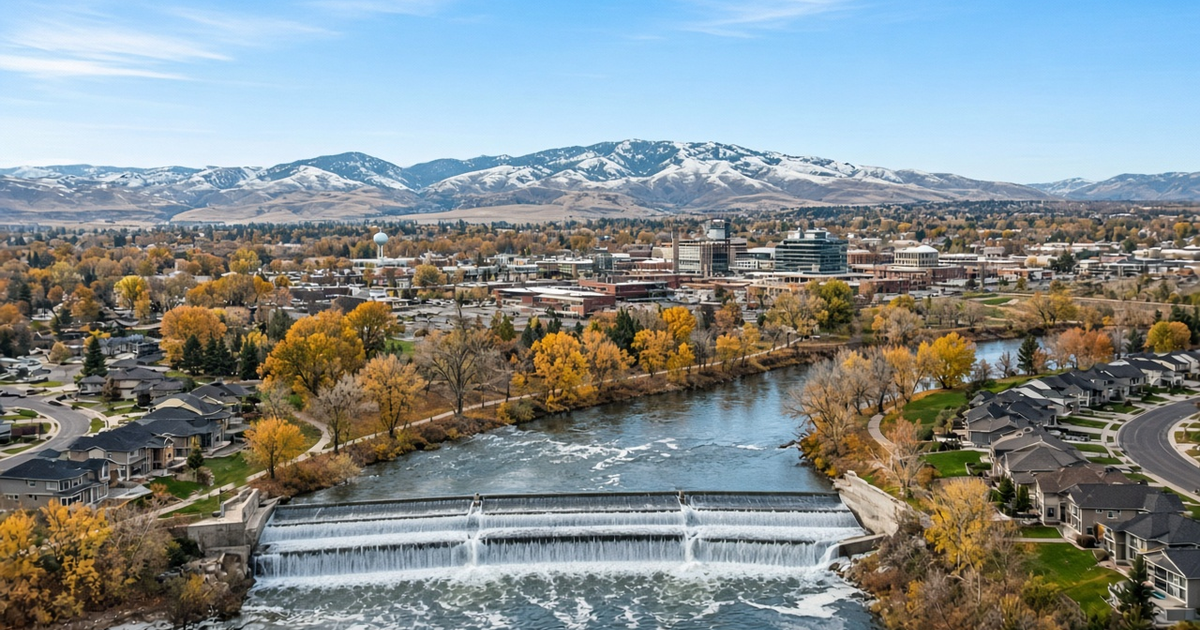
Short answer: Yes, Idaho Falls is growing steadily, from 65,605 people in April 2020 to 71,785 in July 2025 (up 9.4%), and the Idaho Falls metro area is up 10.4% to 173,851 (Census Bureau, Vintage 2025 estimates). That matches Idaho's statewide 10.4%, but the faster growth is in the towns around the city, like Ammon (up 13.5%) and Jefferson County (up 14.3%), while Boise's city limits grew just 1.1%.
I was born and raised in Idaho Falls, so people ask me this all the time, usually with a worried look or an excited one. I wanted a real answer instead of a feeling, so everything below comes from Census Bureau files I downloaded and checked on November 18, 2026. Where I did the math myself, I label it ESTIMATE. For the lifestyle reasons newcomers say they move here, I already covered that in why people are moving to Idaho Falls, so this post sticks to the numbers.
Idaho Falls population: the numbers at a glance
Each block shows the 2010 Census count, the 2020 Census count, the July 1, 2025 estimate, and the change from the Census Bureau's April 2020 estimates base to July 2025. Sources: Census QuickFacts for Idaho Falls, Bonneville County and Ammon, and the Vintage 2025 metro file.
Idaho Falls city
- 2010 Census: 56,813
- 2020 Census: 64,818
- July 1, 2025 estimate: 71,785
- Change since April 2020 estimates base (65,605): up 9.4%
Ammon city
- 2010 Census: 13,816
- 2020 Census: 17,694
- July 1, 2025 estimate: 20,119
- Change since April 2020 estimates base (17,722): up 13.5%
Bonneville County
- 2010 Census: 104,234
- 2020 Census: 123,964
- July 1, 2025 estimate: 135,771
- Change since April 2020 estimates base (123,959): up 9.5%
Jefferson County
- 2010 Census: 26,140
- 2020 Census: 30,891
- July 1, 2025 estimate: 35,297
- Change since April 2020 estimates base (30,891): up 14.3%
Idaho Falls metro area (Bonneville, Jefferson and Butte counties)
- April 2020 estimates base: 157,423
- July 1, 2025 estimate: 173,851
- Change: up 10.4% (ESTIMATE, my arithmetic from the two Census counts)
Idaho statewide
- 2010 Census: 1,567,582
- April 2020 estimates base: 1,839,123
- July 1, 2025 estimate: 2,029,733
- Change since 2020 base: up 10.4%
Looking back further, the city of Idaho Falls has added 14,972 people since the 2010 Census, which is about 26.4% (ESTIMATE, my arithmetic mixing the 2010 Census count with the 2025 estimate). Bonneville County added 31,537 over the same stretch, about 30.3% (ESTIMATE, same method). That is real growth, but it is spread over 15 years, not a boom that happened overnight.
How fast did Idaho Falls grow each year?
This is the part that surprised me. The city did not grow in a straight line. These are the Census Bureau's July 1 estimates from the Vintage 2025 city file for Idaho:
Idaho Falls city, July 1 estimates
- 2020: 65,908
- 2021: 67,170
- 2022: 67,807
- 2023: 68,065
- 2024: 69,568
- 2025: 71,785
The two middle years were slow, up only 258 people from 2022 to 2023 (ESTIMATE, my subtraction), and the latest year was the biggest, up 2,217 people from 2024 to 2025, or about 3.2% (ESTIMATE, my arithmetic). I can tell you what the Census Bureau published. I cannot tell you from this file why the last year jumped, and I would be guessing if I told you it was one single cause. City-level estimates also move when city boundaries change: QuickFacts lists the city's land area at 22.35 square miles in 2010 and 24.00 in 2020, so part of the long-run growth is the city getting bigger on the map.
Where is the growth coming from?
For Bonneville County, the Census Bureau's county file splits growth into births minus deaths and people moving in. From July 2020 to July 2025, the county added 11,041 people (ESTIMATE, my subtraction of the 2020 and 2025 estimates). The Vintage 2025 county file breaks that down:
Bonneville County, July 2020 to July 2025 (five estimate years added up)
- Births minus deaths (natural change): 3,649 people
- Net migration: 7,484 people, of which 6,851 was people moving from other U.S. places and 633 was international
- Unexplained residual: negative 92
So roughly two thirds of the county's growth came from people moving in and one third from babies outnumbering deaths (ESTIMATE, my arithmetic: 7,484 and 3,649 out of 11,041). That second part matters. A county where families are having kids keeps growing even if moves slow down, and Bonneville County had 1,796 births against 1,032 deaths in the latest estimate year.
The moves have cooled off, though. Here is net migration for each estimate year ending in July, from the same county file:
Bonneville County net migration by year
- Year ending July 2021: 2,753
- 2022: 912
- 2023: 1,045
- 2024: 1,557
- 2025: 1,217
That tells me the 2021 jump settled into a steadier pace. Births minus deaths stayed between 655 and 816 people each year over the same stretch. If you have heard that everyone is pouring into Idaho Falls right now, the county numbers say the 2021 pace has roughly halved, though it is still positive (ESTIMATE, my comparison of 1,217 with 2,753).
Is Idaho Falls growing faster than other Idaho cities?
Not faster than most. I took every Idaho city of 10,000 or more people in the Census file and compared the 2020 base to the 2025 estimate. Idaho Falls ranks 15th of those 27 cities (ESTIMATE, my ranking), and it is the fifth largest city in the state by 2025 population (ESTIMATE, my ranking of the same file).
Fastest and slowest, same period
- Meridian: up 21.4% to 142,988
- Nampa: up 19.9% to 120,384
- Ammon: up 13.5% to 20,119
- Idaho Falls: up 9.4% to 71,785
- Twin Falls: up 8.4% to 56,216
- Pocatello: up 3.6% to 58,771
- Rexburg: up 1.4% to 40,334
- Boise: up 1.1% to 238,429
Bonneville County itself ranks 17th of Idaho's 44 counties for percent growth over that period (ESTIMATE, my ranking). Jefferson County, just north, ranks sixth (ESTIMATE, my ranking). If you want the cost side of all this, I put the Census and market numbers side by side in my Idaho Falls cost of living guide.
Growth around Idaho Falls: Ammon, Rigby, Iona, Shelley and Ucon
The edges are growing faster than the middle. Here is each town's change from the 2020 base to the July 2025 estimate in the same city file:
- Ammon: up 13.5% (17,722 to 20,119)
- Rigby: up 14.2% (5,039 to 5,757)
- Iona: up 16.6% (2,726 to 3,179), my arithmetic from the Census counts (ESTIMATE)
- Shelley: up 10.6% (4,793 to 5,303)
- Ucon: up 2.5% (1,167 to 1,196), my arithmetic from the Census counts (ESTIMATE)
Farther out, Blackfoot is up 7.7% (12,405 to 13,361, ESTIMATE, my arithmetic) and Rexburg is nearly flat at 1.4%. I wrote a comparison for each: Idaho Falls vs Ammon, Rigby, Iona, Ucon and Shelley, the Blackfoot town guide and Rexburg vs Idaho Falls. The cities hub has them all in one place.
Jobs and housing: is the economy keeping up?
Population can only grow if people have somewhere to work and somewhere to live. QuickFacts (County Business Patterns, 2023) shows total employment in Bonneville County of 63,119 jobs, up 3.1% from 2022 to 2023, compared with 2.9% for Idaho as a whole. Jefferson County was up 0.8% in the same release. The Idaho National Laboratory is a big part of that picture, and my INL relocation guide covers what working there means for where you live.
On the housing side, QuickFacts shows 52,208 housing units in Bonneville County as of July 1, 2025, and 1,219 building permits in 2025. Jefferson County had 11,524 housing units and 312 building permits in 2025. Households in Bonneville County averaged 2.90 people in the 2020 to 2024 American Community Survey, and 28.0% of residents were under 18. That is a family-heavy county, which fits the births number above.
What this means if you are buying or selling in Idaho Falls
I look at the sales side every week, and the growth picture matches what I see. Snake River MLS (via Navica) shows 1,630 residential closings in Bonneville County from November 1, 2025 to October 31, 2026. For single-family resale homes, 1,155 closed, with a median of 31 days on market and a median sale price at 99.6% of the final list price. Those are my own pulls of the MLS, not Census numbers, and I explain what they mean in how long it takes to sell a house in Idaho Falls.
Here is how I use the growth data with clients:
- Buyers: Steady growth is not the same as a frenzy. If you are comparing towns, look at where new homes are going up. My guide to new construction in Idaho Falls and the builder comparison are a good start.
- Families: Ammon, Rigby and Iona are adding people fastest, so school boundaries matter. Check my school districts guide before you fall in love with a house.
- Sellers: A growing county means a steady stream of new buyers, but price your home on recent sales, not on a population headline.
- Out-of-state buyers: Property tax and HOA rules catch people off guard, so read Idaho Falls property taxes and HOAs explained.
If you want to see how neighborhoods differ inside the city, the neighborhoods hub and the Idaho Falls page are where I would start.
What the Census numbers cannot tell you
A few cautions, because population data gets quoted without them:
- Estimates get revised. The Census Bureau notes that estimates from different vintages are not comparable, so I only compared numbers from Vintage 2025 with each other, plus the 2010 and 2020 Census counts.
- Census counts and estimates are different things. The 2020 Census counted 64,818 people in Idaho Falls, while the estimates base for the same month is 65,605. That is why I use the base for percent change from 2020.
- The income, rent and home value figures use a different survey. Those come from the American Community Survey, which averages 2020 to 2024 and has sampling error, so they lag today's prices. Use MLS data for current prices.
- Growth is not good or bad on its own. Whether a growing Idaho Falls fits you depends on your budget, your commute and how you feel about new neighborhoods. I would rather you decide with numbers than with rumors.
Is Idaho Falls growing: FAQ
Is Idaho Falls growing?
Yes. The Census Bureau estimates the city grew from 65,605 in April 2020 to 71,785 in July 2025, up 9.4%, and Bonneville County grew from 123,959 to 135,771, up 9.5%.
What is the population of Idaho Falls, Idaho?
The Census Bureau's Vintage 2025 estimate for July 1, 2025 is 71,785 for the city, 135,771 for Bonneville County and 173,851 for the Idaho Falls metro area. The 2020 Census counted 64,818 people in the city.
Is Idaho Falls growing faster than Boise?
The city limits are, yes. Idaho Falls is up 9.4% from the 2020 base to 2025, and Boise city is up 1.1%. Meridian (21.4%) and Nampa (19.9%) are growing much faster than either, per the same Census city file.
Which towns near Idaho Falls are growing fastest?
Among the towns I checked, Iona is up 16.6% (ESTIMATE, my arithmetic), Rigby is up 14.2% and Ammon is up 13.5%. Jefferson County, where Rigby is, grew 14.3%, the sixth fastest of Idaho's 44 counties (ESTIMATE, my ranking).
Where is Idaho Falls growth coming from?
About two thirds from people moving in and one third from more births than deaths, based on the Census county file for Bonneville County from July 2020 to July 2025 (ESTIMATE, my arithmetic). Net migration was 2,753 in the year ending July 2021 and 1,217 in the year ending July 2025.
Is Idaho Falls growth slowing down?
Migration into Bonneville County has slowed from its 2021 peak, but the city's latest year (July 2024 to July 2025) was its largest one-year gain in the 2020 to 2025 series, up 2,217 people (ESTIMATE, my subtraction). I would call it steady, not slowing or surging.
Sources
Census Bureau city and town totals and county totals (Vintage 2025), metro totals, QuickFacts for Jefferson County and Idaho, QuickFacts for Idaho Falls, Bonneville County and Ammon linked above, and Snake River MLS via Navica for Bonneville County, November 1, 2025 to October 31, 2026. I am Jacob Marcovitz, a Realtor with Keller Williams Realty East Idaho, and I checked these files on November 18, 2026.

Jacob Marcovitz
| Jacob Marcovitz | Keller Williams Realty East Idaho
or another way